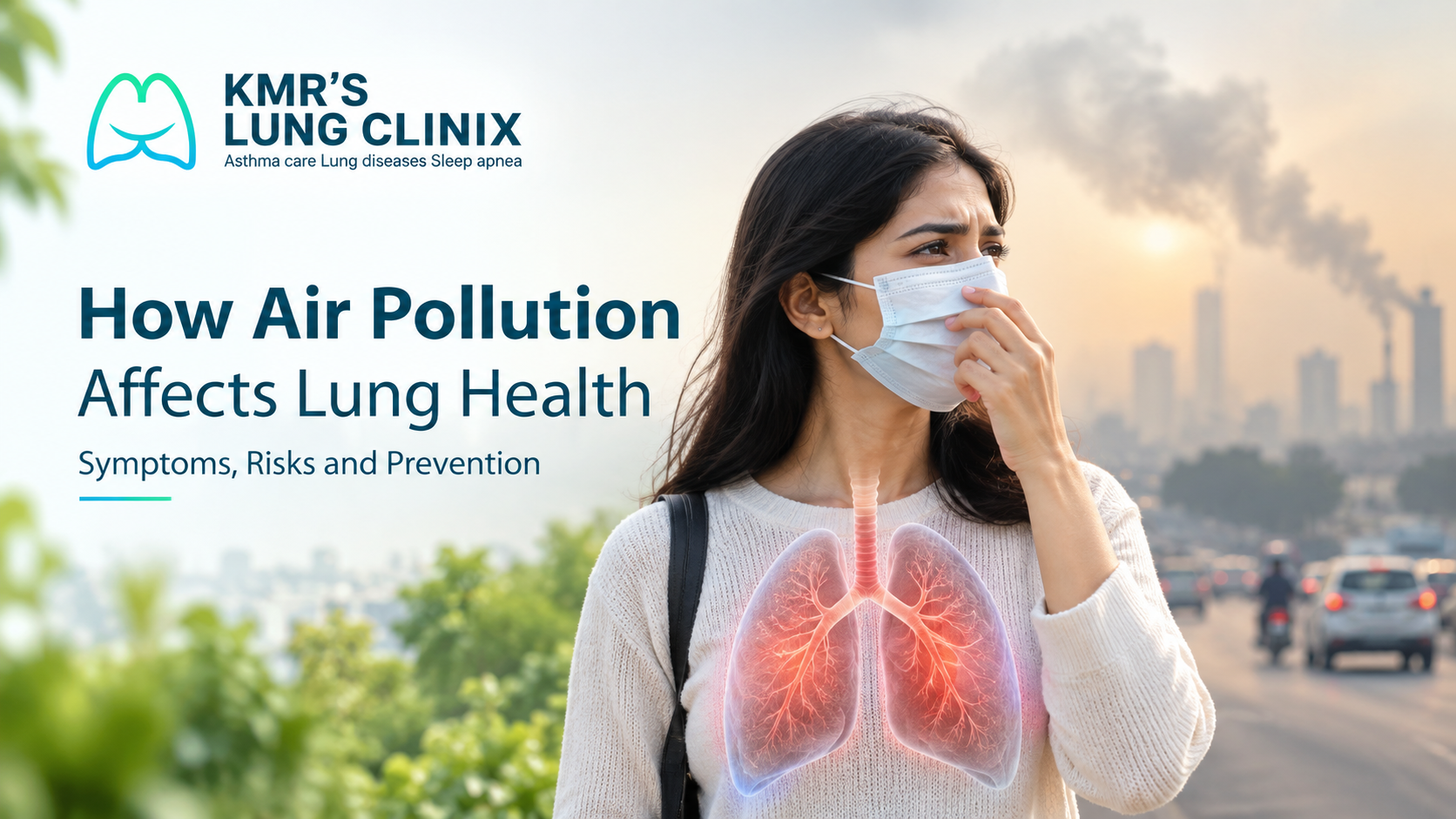
Air pollution is a growing concern for respiratory health, especially in urban areas such as Chennai. Everyday exposure to vehicle emissions, construction dust, industrial pollutants and smoke can affect the lungs and worsen existing breathing problems. Understanding how air pollution affects lung health can help you recognise early symptoms and take practical steps to protect your respiratory system.
At LUNG CLINIX, we believe that awareness, timely medical evaluation and appropriate respiratory care are important for maintaining better lung health.
What Is Air Pollution?
Air pollution occurs when harmful gases, particles and other substances contaminate the air we breathe. Common pollutants include particulate matter (PM2.5 and PM10), nitrogen dioxide, ground-level ozone and smoke.
Fine particles such as PM2.5 can travel deep into the lungs and may contribute to inflammation and other respiratory problems. Prolonged or repeated exposure can increase the risk of developing certain lung conditions.
How Does Air Pollution Affect Lung Health?
Air pollution can irritate the airways, trigger inflammation and affect normal breathing. Its impact depends on the type of pollutant, exposure level, duration and an individual’s overall health.
Common effects include:
- Airway irritation: Polluted air may cause coughing, throat irritation and discomfort while breathing.
- Worsening asthma: Air pollution can trigger asthma symptoms, including wheezing, chest tightness and breathlessness.
- Reduced lung function: Long-term exposure may contribute to reduced lung function, particularly in people with existing respiratory conditions.
- Increased respiratory infections: Air pollution can affect the lungs’ natural defence mechanisms and is associated with an increased risk of respiratory infections.
- Increased risk of chronic lung disease: Long-term exposure to air pollution is linked to conditions such as chronic obstructive pulmonary disease (COPD).
Common Symptoms of Air Pollution Exposure
Symptoms can vary depending on exposure and individual sensitivity. Watch for:
- Persistent cough or throat irritation
- Wheezing or noisy breathing
- Shortness of breath during everyday activities
- Chest tightness or discomfort
- Increased mucus production
- Worsening allergy or asthma symptoms
These symptoms can have several causes and should not automatically be attributed to pollution. Seek medical advice if they persist, recur frequently or interfere with daily activities.
Seek urgent medical attention for severe breathlessness, significant chest pain, bluish lips or confusion.
Who Is Most at Risk from Air Pollution?
Although air pollution can affect everyone, some people are more vulnerable:
- Children, whose lungs are still developing
- Older adults
- People with asthma, COPD or other chronic respiratory conditions
- Individuals with heart or lung disease
- People who work outdoors or experience frequent exposure to dust, fumes and smoke
People in these groups may benefit from taking extra precautions during periods of poor air quality.
How to Protect Your Lungs from Air Pollution
You cannot eliminate all exposure, but practical measures can help reduce respiratory risks.
- Check the Air Quality Index (AQI)
Monitor local AQI reports before outdoor exercise or prolonged outdoor activities. Reduce strenuous outdoor activity when air quality is poor.
- Reduce exposure to outdoor pollutants
Keep windows closed during periods of heavy pollution when practical. Choose less congested routes for walking or exercise and avoid areas with heavy traffic or construction dust.
- Consider a well-fitting N95 or equivalent respirator
A properly fitted particulate respirator can reduce exposure to airborne particles when pollution levels are high. It does not protect against every harmful gas.
- Improve indoor air quality
Avoid smoking indoors, burning waste and unnecessary incense or other sources of smoke. Use suitable ventilation when outdoor air quality permits, and consider an appropriately sized air purifier where practical.
- Follow your respiratory treatment plan
If you have asthma or COPD, follow your doctor’s prescribed treatment and keep recommended medicines available. Do not change or stop medication without medical advice.
- Seek medical advice when symptoms persist
A pulmonologist may recommend an examination or lung function tests, depending on your symptoms and medical history.
When Should You Consult a Pulmonologist?
Consult a respiratory specialist if you experience a persistent cough, repeated wheezing, unexplained breathlessness, frequent chest infections or worsening asthma symptoms. Early assessment can help identify the cause and guide appropriate treatment.
At LUNG CLINIX, patients can seek professional evaluation for respiratory symptoms and guidance on appropriate lung health assessments.
Frequently Asked Questions (FAQs)
1. Can air pollution cause breathing problems?
Yes. Air pollution can irritate the airways and trigger coughing, wheezing and breathlessness. It can also worsen existing respiratory conditions.
2. Does air pollution make asthma worse?
Yes. Pollutants such as particulate matter, ozone and nitrogen dioxide can trigger asthma symptoms and increase the likelihood of flare-ups in susceptible individuals.
3. How can I protect my lungs on high-pollution days?
Check the AQI, limit strenuous outdoor activity, reduce exposure to traffic emissions and consider a well-fitting N95 respirator when appropriate.
4. Can air pollution cause long-term lung damage?
Long-term exposure is associated with reduced lung function and an increased risk of chronic respiratory diseases. The level of risk depends on exposure and individual factors.
5. When should I see a lung specialist in Chennai?
Consult a pulmonologist if you have a persistent cough, recurrent wheezing, ongoing breathlessness or respiratory symptoms that worsen during periods of poor air quality.
Conclusion
Air pollution can affect lung health in both the short and long term. Recognising symptoms, monitoring air quality and reducing exposure can help protect your respiratory health. If breathing problems persist or worsen, consult a qualified respiratory specialist for appropriate evaluation.
LUNG CLINIX encourages individuals to take proactive steps towards better lung health through awareness, prevention and timely medical care.