Breathing problems do not always show up clearly on routine lung function tests. Symptoms such as persistent cough, wheezing, chest tightness, or shortness of breath may sometimes require more detailed evaluation. Airway oscillometry is an advanced, non-invasive lung function test that can help doctors assess how easily air moves through the airways.
For people looking for airway oscillometry in Chennai, understanding what the test does, who may benefit from it, and how it differs from conventional pulmonary function testing can help them make informed decisions about their respiratory health.
At LUNG CLINIX, advanced pulmonary diagnostic services are available to help evaluate different respiratory conditions and support personalized treatment planning.
What Is Airway Oscillometry?
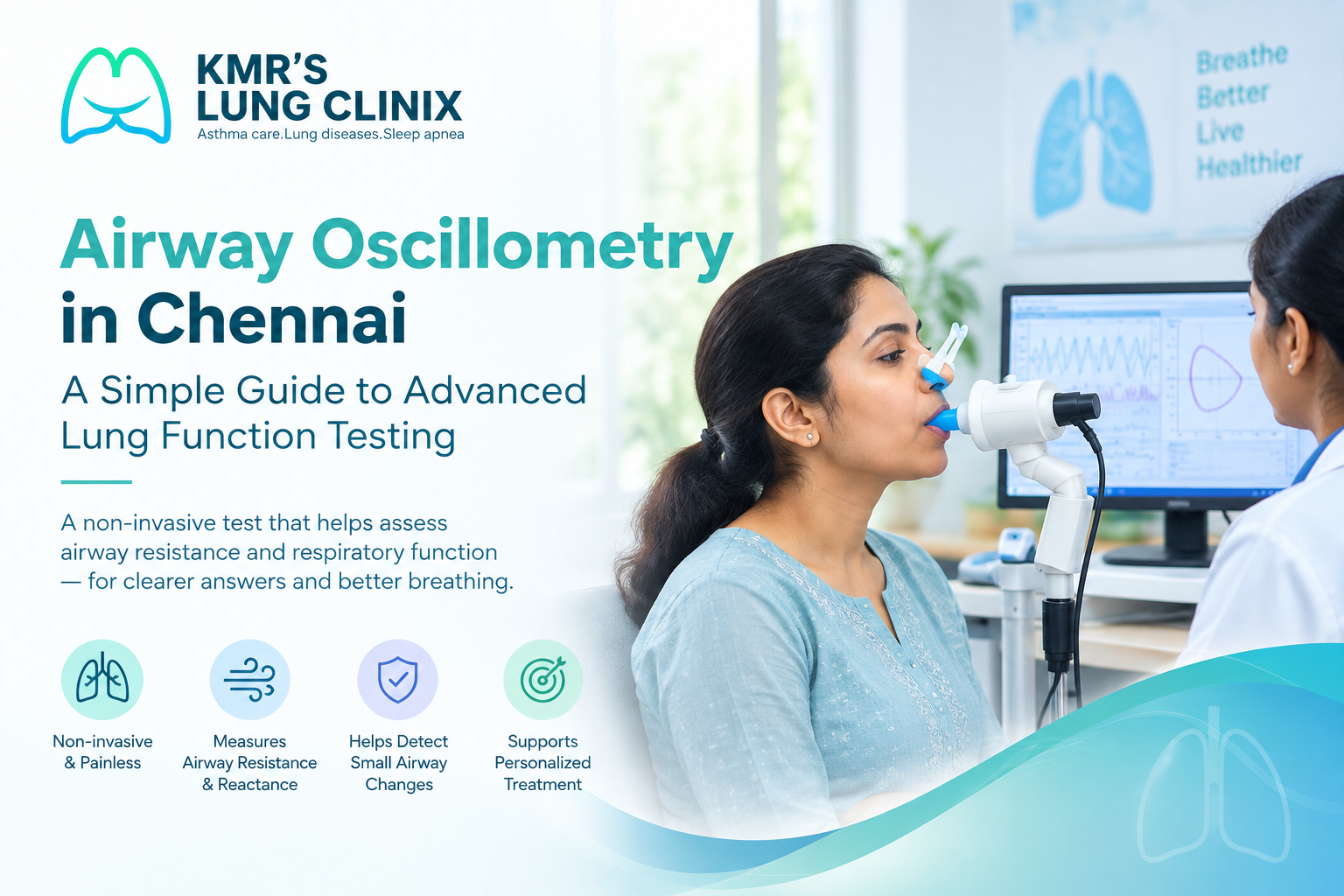
Airway oscillometry is a non-invasive pulmonary function test that measures the resistance and reactance of the respiratory system while a person breathes normally.
During the test, gentle pressure oscillations are introduced through a mouthpiece. The device analyzes how these small pressure waves travel through the respiratory system. This can provide information about airway function, including changes that may not always be obvious from symptoms alone.
Unlike some conventional lung function tests that require forceful breathing manoeuvres, oscillometry generally involves quiet, normal breathing, making it useful for certain patients who may have difficulty performing effort-dependent tests.
Why Is Airway Oscillometry Done?
A pulmonologist may recommend airway oscillometry when additional information about airway function is needed.
It may be useful in evaluating or monitoring conditions such as:
- Asthma and suspected asthma
- Small-airway dysfunction
- Chronic respiratory symptoms
- Wheezing and recurrent cough
- Breathing difficulties that are not fully explained by routine testing
- Certain obstructive airway conditions
- Changes in airway function during follow-up
The test results are interpreted along with symptoms, medical history, physical examination, and other investigations.
How Does Airway Oscillometry Work?
The procedure is relatively simple.
Step 1: Sit comfortably
You will usually sit upright and breathe normally through a mouthpiece.
Step 2: Follow the technician’s instructions
The nose may be gently clipped to ensure that breathing occurs through the mouth during the measurement.
Step 3: Breathe normally
Unlike some pulmonary tests, you generally do not need to repeatedly take deep breaths or blow forcefully.
Step 4: The device records measurements
The oscillometry system sends small pressure waves through the airways and records the respiratory system’s response.
Step 5: A pulmonologist interprets the results
The results are considered together with your symptoms and other clinical findings to determine whether further evaluation or treatment is needed.
What Can Airway Oscillometry Detect?
Airway oscillometry can provide information about airway resistance and respiratory system reactance. These measurements can help clinicians understand how the airways and respiratory system respond during breathing.
One important advantage is that oscillometry may provide useful information about small-airway function, depending on the equipment and testing protocol used.
However, airway oscillometry is not a stand-alone test for diagnosing every lung condition. Your pulmonologist may combine it with spirometry, bronchodilator testing, FeNO, imaging, or other investigations when clinically appropriate.
Airway Oscillometry vs. Spirometry: What’s the Difference?
Both tests evaluate lung function, but they work differently.
| Feature | Airway Oscillometry | Spirometry |
| Breathing pattern | Usually normal, relaxed breathing | Requires specific breathing manoeuvres |
| Effort required | Relatively low | Requires active effort |
| Measures | Resistance and reactance | Airflow and lung volumes such as FEV1 and FVC |
| Useful for | Detailed assessment of airway mechanics | Assessing airflow limitation |
| Patient cooperation | Generally simpler | Requires following forceful breathing instructions |
A doctor may recommend one test or both depending on the patient’s symptoms and clinical needs.
Who May Benefit From Airway Oscillometry?
Airway oscillometry may be considered for people experiencing:
- Unexplained breathlessness
- Recurrent wheezing
- Persistent or recurrent cough
- Suspected asthma
- Difficulty performing conventional lung function tests
- Respiratory symptoms despite inconclusive initial testing
- The need for additional assessment of airway function
The decision to undergo the test should be made by a qualified respiratory physician based on individual symptoms and medical history.
Is Airway Oscillometry Painful?
No. Airway oscillometry is generally painless and non-invasive.
The patient typically breathes normally through a mouthpiece while the equipment records respiratory measurements. Because the test generally requires less forceful breathing than spirometry, some people may find it easier to perform.
Your healthcare provider will explain the procedure before testing.
How Long Does the Test Take?
The actual measurement is usually relatively quick, although the total appointment time can vary depending on the testing protocol and whether additional pulmonary function tests are performed.
Your respiratory specialist or lung function technician can explain the expected duration and any preparation required before the test.
Why Choose LUNG CLINIX for Airway Oscillometry in Chennai?
If you are searching for airway oscillometry in Chennai, choosing a respiratory-focused centre can be helpful when your symptoms require specialized pulmonary evaluation.
LUNG CLINIX provides respiratory care and advanced pulmonary diagnostic services in Chennai. Its diagnostic approach can help doctors evaluate breathing symptoms and select appropriate investigations based on individual patient needs.
Whether you are experiencing persistent cough, wheezing, breathlessness, or suspected airway disease, a pulmonologist can determine whether airway oscillometry or another lung function test is appropriate for you.
Frequently Asked Questions About Airway Oscillometry
1. What is airway oscillometry used for?
Airway oscillometry is used to assess respiratory system mechanics, including airway resistance and reactance. It can provide additional information when evaluating conditions such as asthma and other airway-related respiratory problems.
2. Is airway oscillometry better than spirometry?
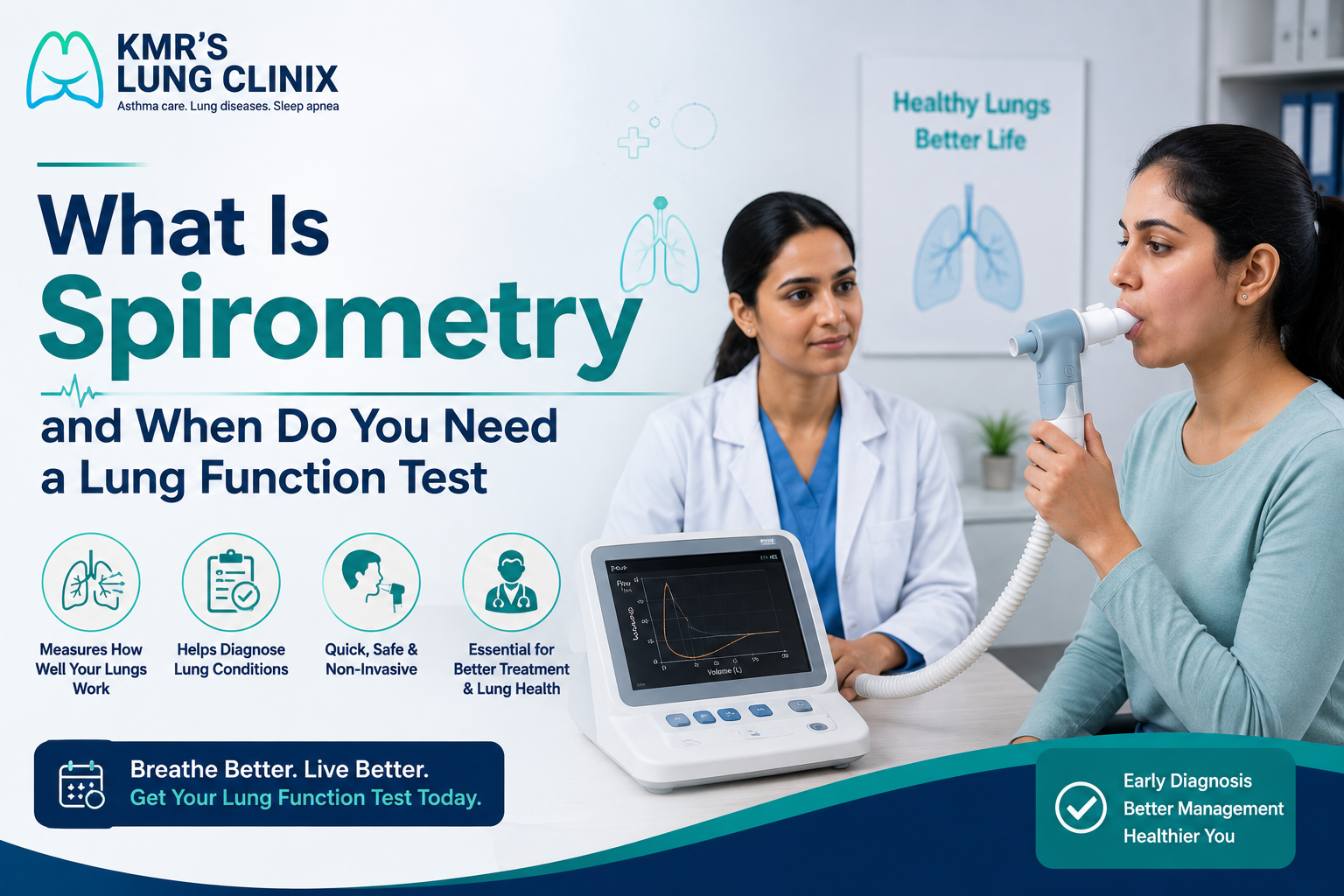
Neither test is universally better. They measure different aspects of respiratory function. Spirometry evaluates airflow using forced breathing manoeuvres, while oscillometry assesses respiratory mechanics during normal breathing. A pulmonologist may recommend one or both depending on the clinical situation.
3. Is airway oscillometry suitable for asthma patients?
It may be useful when evaluating or monitoring asthma and airway dysfunction. Your pulmonologist will determine whether it is appropriate based on your symptoms and other test results.
4. Where can I get airway oscillometry in Chennai?
Patients looking for airway oscillometry in Chennai can consult LUNG CLINIX, a respiratory care centre offering advanced pulmonary diagnostic services. The appropriate test is selected after clinical evaluation.
5. Do I need airway oscillometry if I already had spirometry?
Not necessarily. Airway oscillometry and spirometry provide different types of information. If your symptoms continue despite initial testing, your pulmonologist may recommend additional investigations to better understand your airway function.
When Should You Consult a Pulmonologist?
Persistent respiratory symptoms should not be ignored, particularly when they interfere with daily activities or sleep.
Consider consulting a pulmonologist if you experience:
- Breathlessness that keeps returning
- Persistent cough
- Frequent wheezing
- Chest tightness
- Recurrent respiratory infections
- Symptoms that worsen with exercise or exposure to triggers
- Respiratory symptoms despite previous treatment
Early evaluation can help identify the underlying cause and guide appropriate management.
Conclusion
Airway oscillometry is an advanced, non-invasive method of assessing respiratory system function. Because it measures airway resistance and reactance during normal breathing, it can provide useful information alongside conventional pulmonary function tests in selected patients.
If you are searching for airway oscillometry in Chennai, LUNG CLINIX can help you understand whether this advanced lung function test is appropriate for your symptoms. A pulmonologist can assess your condition, recommend suitable investigations, and develop an individualized respiratory care plan.
LUNG CLINIX – Specialized respiratory care and advanced pulmonary diagnostics in Chennai.