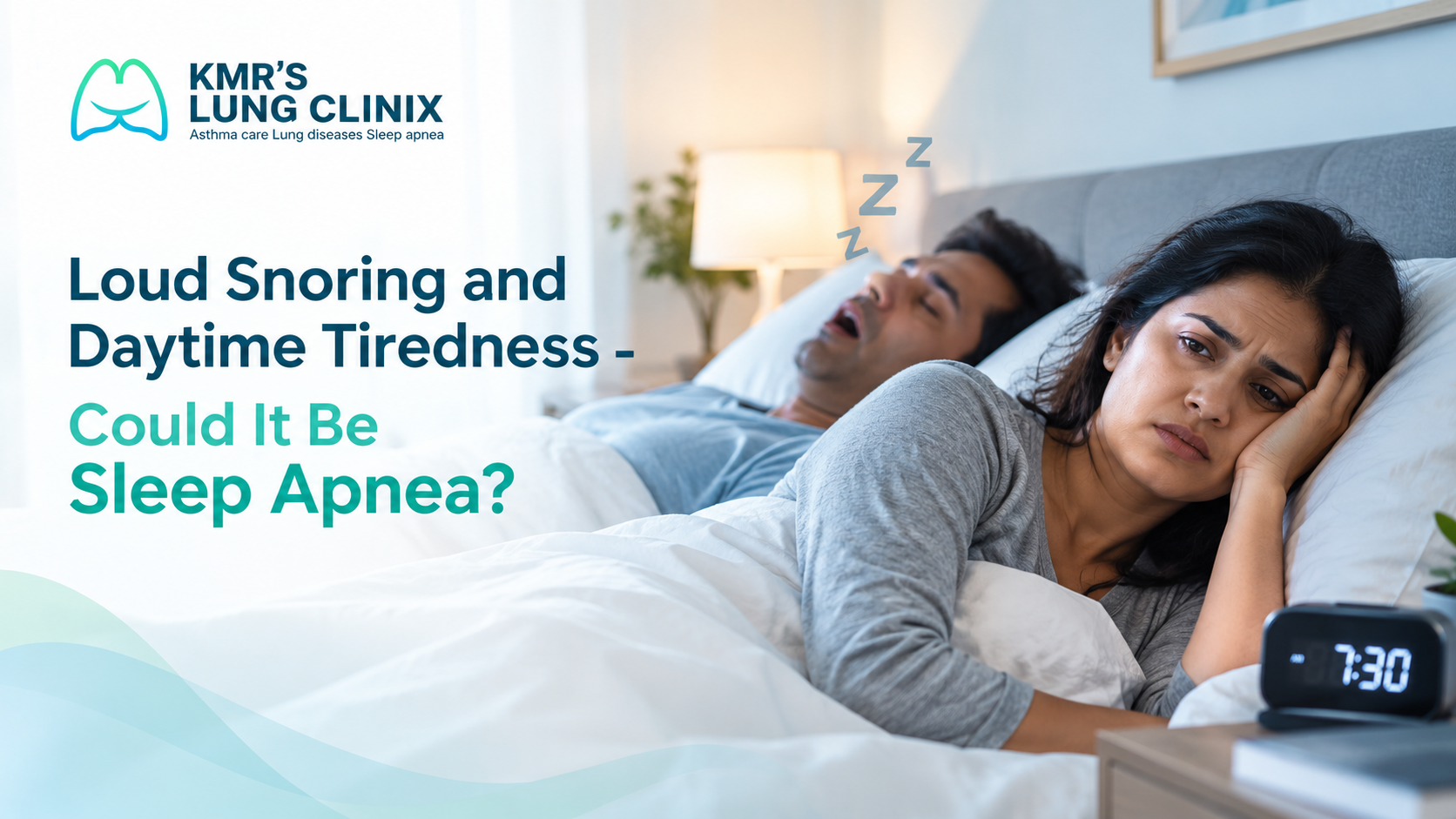
Loud snoring and feeling tired throughout the day are common problems that many people overlook. While occasional snoring may not be a cause for concern, persistent loud snoring combined with excessive daytime sleepiness can sometimes indicate an underlying sleep disorder called obstructive sleep apnea (OSA).
Sleep apnea can affect sleep quality, energy levels, concentration, and overall health. Recognizing the symptoms early and seeking medical advice can help individuals understand the cause of their sleep difficulties. At LUNG CLINIX (KMR’s LUNG CLINIX), understanding respiratory and sleep-related symptoms is an important step toward better breathing and healthier sleep.
What Is Sleep Apnea?
Sleep apnea is a condition in which breathing repeatedly stops or becomes reduced during sleep. The most common type, obstructive sleep apnea, occurs when the upper airway becomes partially or completely blocked during sleep.
These interruptions can reduce oxygen levels and briefly disturb sleep, sometimes without the person realizing it. As a result, individuals may wake up feeling unrefreshed even after spending enough hours in bed.
Common risk factors include excess body weight, increasing age, certain anatomical features of the upper airway, and a family history of sleep apnea. However, people of different body types and ages can also develop the condition.
Common Signs of Sleep Apnea
Recognizing the warning signs can help you decide when to seek professional evaluation.
1. Loud and Persistent Snoring
Frequent, loud snoring may occur when airflow encounters resistance in the upper airway. Although not everyone who snores has sleep apnea, persistent snoring accompanied by other symptoms should not be ignored.
2. Pauses in Breathing During Sleep
A partner or family member may notice repeated pauses in breathing, followed by gasping, choking, or snorting sounds. These observations are important clues that warrant medical assessment.
3. Excessive Daytime Sleepiness
People with sleep apnea may feel unusually sleepy during work, conversations, or daily activities because repeated sleep interruptions prevent restorative rest.
4. Morning Headaches and Dry Mouth
Some individuals experience headaches upon waking, a dry mouth, or a sore throat. These symptoms can have several causes, but they may occur alongside sleep-disordered breathing.
5. Difficulty Concentrating
Poor-quality sleep can affect memory, attention, mood, and productivity. Persistent daytime fatigue may also make driving and operating machinery unsafe.
Why Should Sleep Apnea Be Taken Seriously?
Untreated obstructive sleep apnea is associated with an increased risk of high blood pressure, cardiovascular problems, and metabolic complications. It can also contribute to daytime impairment and an increased risk of accidents caused by sleepiness.
Not everyone with snoring or tiredness has sleep apnea. However, repeated breathing pauses, gasping during sleep, and significant daytime sleepiness are reasons to consult a healthcare professional rather than relying on home remedies alone.
If you experience severe breathing difficulty while awake, chest pain, or other sudden, serious symptoms, seek urgent medical attention.
How Is Sleep Apnea Diagnosed?
A healthcare professional may review your symptoms, medical history, medications, and risk factors before recommending appropriate testing.
Depending on your situation, assessment may include:
- Clinical evaluation: Reviewing snoring patterns, daytime sleepiness, and reports of breathing pauses.
- Sleep study: A home sleep apnea test or an overnight sleep study in a laboratory may be recommended.
- Result interpretation: The findings help determine whether sleep apnea is present and assess its severity.
A sleep questionnaire can help identify risk, but it cannot confirm the diagnosis on its own.
Treatment Options for Sleep Apnea
Treatment depends on the severity of the condition, individual health factors, and clinical findings.
- CPAP therapy: Continuous positive airway pressure therapy uses a device and mask to help keep the airway open during sleep.
- Lifestyle changes: Weight management, regular physical activity, and avoiding alcohol near bedtime may help some individuals.
- Positional therapy: For selected patients, avoiding sleeping on the back may reduce breathing interruptions.
- Oral appliances: Certain custom-fitted dental devices can help reposition the jaw and improve airflow.
- Specialist treatment: Selected cases may benefit from further evaluation for other medical or surgical options.
A qualified healthcare professional can help identify the most appropriate approach.
When Should You Consult KMR’s LUNG CLINIX?
Consider seeking medical advice if you regularly snore loudly, wake up gasping, experience unexplained daytime tiredness, or have been told that your breathing repeatedly stops during sleep.
LUNG CLINIX can be a starting point for discussing persistent breathing and sleep-related concerns and understanding whether further evaluation is appropriate.
Better sleep begins with recognizing the warning signs. If loud snoring and daytime fatigue are affecting your quality of life, do not dismiss them as ordinary tiredness. Timely assessment can help identify the cause and guide appropriate care.
Frequently Asked Questions (FAQs)
1. Does loud snoring always mean sleep apnea?
No. Snoring can occur without sleep apnea. However, loud, persistent snoring accompanied by breathing pauses, gasping, or daytime sleepiness should be medically evaluated.
2. Why do I feel tired during the day even after sleeping for eight hours?
Poor sleep quality, sleep apnea, insomnia, certain medications, and other medical conditions can cause daytime fatigue despite adequate time in bed. A healthcare professional can help identify the cause.
3. How is obstructive sleep apnea diagnosed?
Diagnosis usually involves a clinical assessment and, when indicated, a sleep study. Depending on individual circumstances, this may be conducted at home or in a sleep laboratory.
4. Can sleep apnea be treated without surgery?
Yes. Many people can manage sleep apnea with treatments such as CPAP therapy, selected oral appliances, and appropriate lifestyle changes. The best option depends on the individual’s condition.
5. When should I consult a sleep or lung specialist?
Seek an evaluation if you have frequent loud snoring, witnessed breathing pauses, nighttime choking, persistent daytime sleepiness, or morning headaches. Avoid driving when excessively sleepy and seek medical advice promptly.