Breathing comfortably is essential for a healthy life, but persistent coughing, wheezing, or shortness of breath may indicate an underlying respiratory problem. Recognising these symptoms early can help you seek appropriate medical care and prevent certain conditions from worsening.
If you are searching for a Pulmonologist in Alwarpet, understanding when to consult a lung specialist is an important first step. A pulmonologist diagnoses and manages respiratory conditions such as asthma, chronic obstructive pulmonary disease (COPD), lung infections, and other breathing disorders.
LUNG CLINIX focuses on respiratory health and helping patients understand when specialist evaluation may be needed.
Who Is a Pulmonologist?
A pulmonologist is a medical specialist who diagnoses and treats diseases affecting the lungs and respiratory system. These specialists evaluate symptoms such as chronic cough, breathing difficulties, chest tightness, and recurring respiratory infections.
Consulting a pulmonologist can help identify the cause of persistent symptoms and determine an appropriate treatment plan based on your medical history and examination.
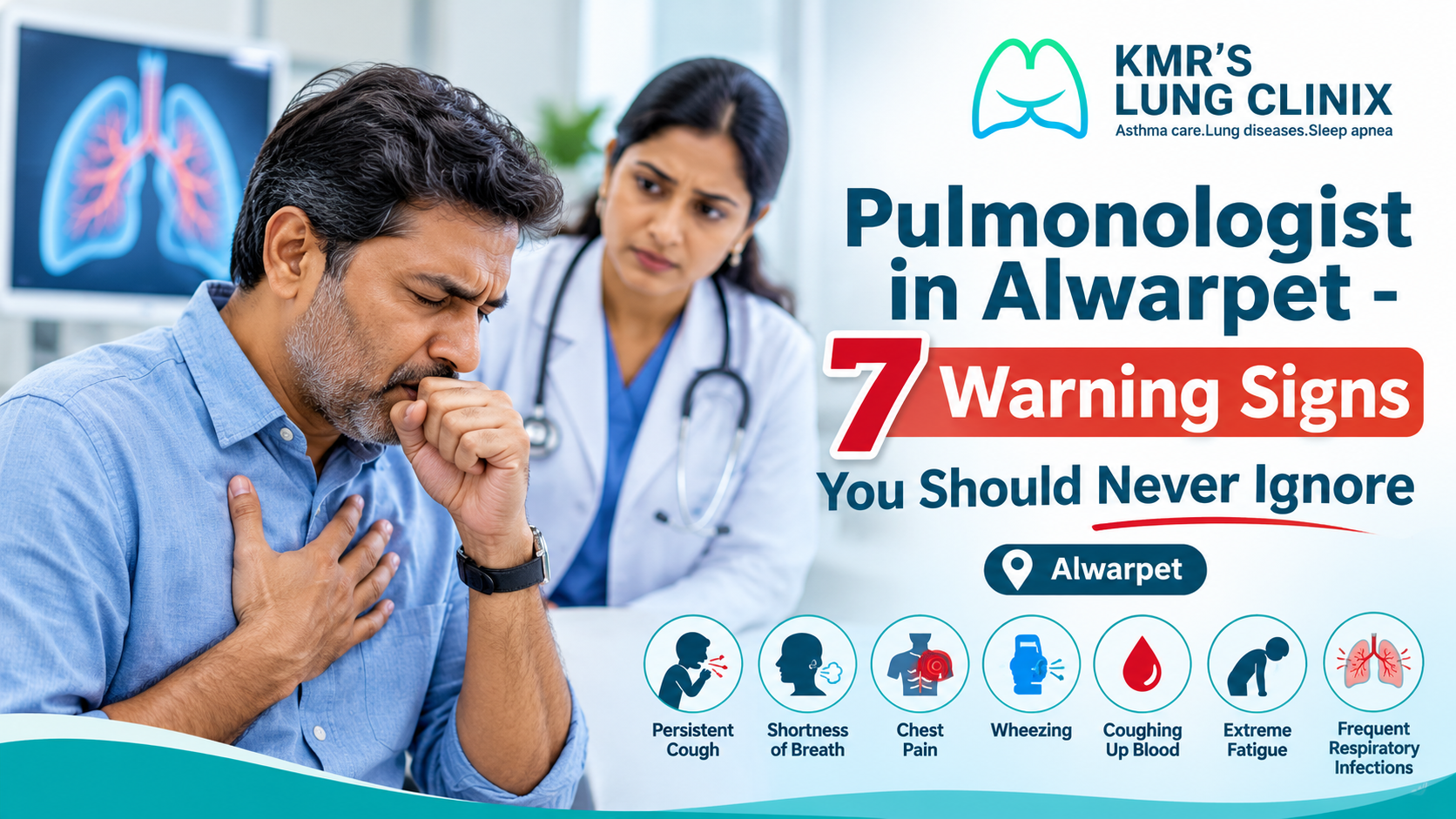
7 Warning Signs You Should Never Ignore
1. Persistent Cough That Does Not Improve
A cough that lasts longer than three weeks deserves medical evaluation, particularly if it is worsening or accompanied by other symptoms. Possible causes include asthma, allergies, respiratory infections, acid reflux, and other lung conditions.
A pulmonologist can assess the cause and recommend further investigations if necessary.
2. Shortness of Breath During Everyday Activities
Feeling breathless while walking, climbing stairs, or performing routine tasks should not be ignored, especially if the symptom is new or getting worse.
Breathlessness may be associated with asthma, COPD, lung infections, heart conditions, or other medical problems. A medical assessment can help identify the underlying cause.
Seek emergency medical care if breathing difficulty is sudden or severe, or occurs with blue or grey lips, fainting, confusion, or significant chest pain.
3. Wheezing or Whistling Sounds While Breathing
Wheezing is a high-pitched whistling sound that may occur when air moves through narrowed airways. It is commonly associated with asthma but can also occur with other respiratory conditions.
If you experience recurring wheezing, particularly at night or after exercise, consult a doctor for evaluation.
4. Frequent Chest Infections
Repeated episodes of bronchitis, pneumonia, or other respiratory infections may require further investigation, especially when recovery is slow or symptoms repeatedly return.
A pulmonologist may recommend appropriate tests to evaluate lung function, identify contributing conditions, and guide treatment.
5. Chest Tightness or Discomfort
Chest tightness can occur with asthma and other respiratory disorders. However, chest discomfort can also be a sign of a serious heart or lung problem.
Do not assume chest pain is caused by a respiratory condition. Seek emergency care for new or severe chest pain, particularly when accompanied by breathlessness, sweating, nausea, or pain spreading to the arm or jaw.
6. Coughing Up Blood
Blood in your sputum, even in small amounts, requires prompt medical assessment. Causes may include respiratory infections, airway inflammation, or more serious lung conditions.
Seek urgent medical attention, particularly if bleeding is more than a small streak or occurs with breathing difficulty, chest pain, or dizziness.
7. Persistent Fatigue Along With Breathing Problems
Unusual tiredness, reduced exercise tolerance, or weakness alongside respiratory symptoms may indicate an underlying health issue.
Conditions such as COPD, sleep-related breathing disorders, anaemia, and heart disease can contribute to these symptoms. A doctor can determine whether respiratory testing or other investigations are appropriate.
When Should You Consult a Pulmonologist in Alwarpet?
Consider consulting a pulmonologist if you experience:
- A cough lasting more than three weeks.
- Recurrent wheezing or asthma symptoms.
- Breathlessness during routine activities.
- Repeated chest infections.
- Persistent respiratory symptoms that interfere with sleep or daily life.
A pulmonologist may recommend investigations such as spirometry, chest imaging, or other tests depending on your symptoms and clinical findings.
If symptoms are sudden or severe, do not wait for a routine appointment. Seek emergency medical care.
How LUNG CLINIX Can Help With Respiratory Health
If you are looking for a Pulmonologist in Alwarpet, LUNG CLINIX can be a starting point for learning about respiratory symptoms, specialist evaluation, and available lung care services.
Depending on the patient’s symptoms and clinical assessment, respiratory care may involve evaluating persistent cough, asthma, breathing difficulties, and other lung conditions. Diagnostic tests and treatment recommendations should be tailored to the individual.
For information about consultations and available services, visit the LUNG CLINIX website or contact the clinic directly.
Frequently Asked Questions (FAQs)
1. When should I visit a pulmonologist in Alwarpet?
Consult a pulmonologist if you have a persistent cough, recurring wheezing, unexplained breathlessness, repeated chest infections, or other ongoing respiratory symptoms. Sudden or severe breathing difficulties require emergency care.
2. What diseases does a pulmonologist treat?
Pulmonologists diagnose and manage conditions such as asthma, COPD, chronic cough, certain lung infections, interstitial lung diseases, and sleep-related breathing disorders.
3. Can a pulmonologist help with a persistent cough?
Yes. A pulmonologist can evaluate a persistent cough, identify possible causes, and recommend suitable tests or treatment based on the clinical findings.
4. What tests might a pulmonologist recommend?
Depending on your symptoms, tests may include spirometry, chest X-rays, CT scans, allergy testing, or laboratory investigations. Not every patient needs every test.
5. How do I find the right pulmonologist in Alwarpet?
Look for a qualified respiratory specialist with relevant clinical experience, appropriate diagnostic support, and clear communication about your condition and treatment options. Confirm the clinic’s location and appointment availability before visiting.