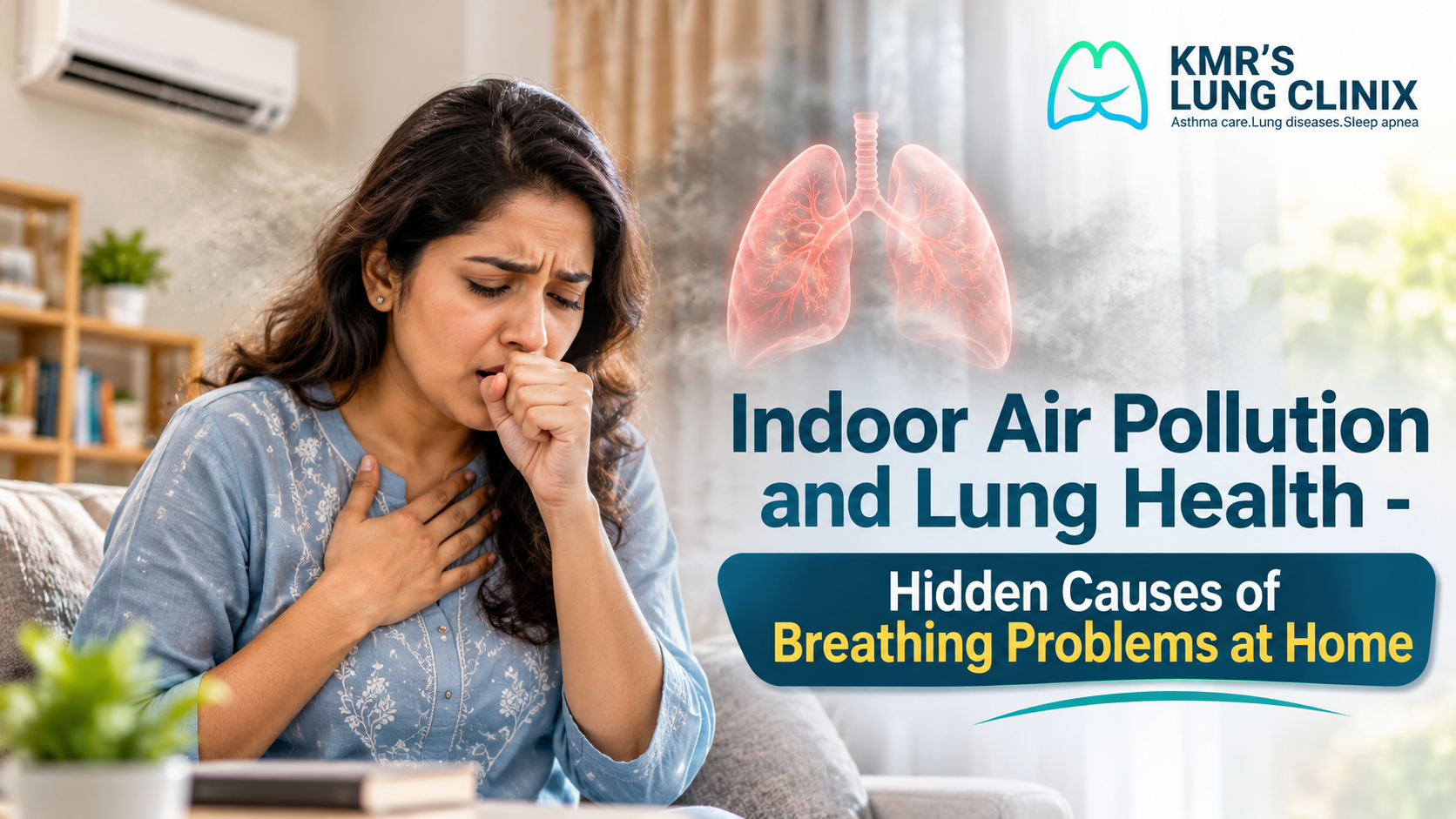
Your home should be a safe place to relax and breathe comfortably. However, indoor air pollution can affect lung health without you even noticing it. Dust, cooking smoke, mould, cleaning chemicals, poor ventilation and other hidden pollutants can reduce indoor air quality and trigger respiratory problems.
Many people experience frequent coughing, sneezing, wheezing or breathing difficulties without realising that the cause may be inside their homes.
Understanding the common sources of indoor air pollution and taking preventive steps can help protect your respiratory health. At LUNG CLINIX, we believe that awareness and timely respiratory care are important for maintaining healthy lungs.
What Is Indoor Air Pollution?
Indoor air pollution refers to the presence of harmful particles, gases and biological pollutants inside homes, offices and other enclosed spaces.
Unlike outdoor pollution, indoor pollutants can remain trapped in poorly ventilated rooms, increasing the risk of prolonged exposure.
People with asthma, allergies, COPD and other respiratory conditions may be particularly sensitive to poor indoor air quality.
7 Hidden Causes of Indoor Air Pollution at Home
1. Cooking Smoke and Fumes
Cooking with solid fuels, poor-quality ventilation and inadequate exhaust systems can release smoke and harmful particles. These pollutants may irritate the airways and worsen existing respiratory conditions.
2. Dust and Dust Mites
Household dust, carpets, mattresses, curtains and soft furniture can collect dust mites and allergens. Exposure may trigger sneezing, coughing, nasal congestion and asthma symptoms.
3. Mould and Damp Walls
Moisture from leaking pipes, bathrooms and poorly ventilated rooms encourages mould growth. Mould spores can become airborne and trigger allergic reactions and respiratory irritation.
4. Household Cleaning Chemicals
Strong cleaning products, room fresheners, disinfectant sprays and chemical fragrances may release volatile organic compounds (VOCs). Frequent exposure can irritate the eyes, nose and respiratory tract.
5. Cigarette and Tobacco Smoke
Second-hand smoke contains harmful chemicals and fine particles. Exposure can increase respiratory risks, worsen asthma and negatively affect lung health, especially in children.
6. Poor Ventilation
Closed windows and insufficient airflow allow indoor pollutants to accumulate. Proper ventilation helps remove stale air and reduce pollutant concentration.
7. Incense Sticks and Mosquito Coils
Burning incense sticks, candles and mosquito coils can release smoke and fine particulate matter. Regular exposure in enclosed spaces may irritate the respiratory system.
How Does Indoor Air Pollution Affect Lung Health?
Continuous exposure to indoor pollutants can affect the respiratory system in several ways, including:
- Persistent coughing: Irritation of the airways may cause frequent or prolonged coughing.
- Asthma flare-ups: Dust, smoke and chemical fumes can trigger asthma symptoms.
- Breathing difficulties: Polluted indoor air may cause chest tightness, wheezing and breathlessness.
- Allergic reactions: Dust mites, mould and pet allergens may trigger respiratory allergies.
- Worsening of COPD: Indoor smoke and airborne particles can worsen symptoms in people with COPD.
Long-term exposure to certain indoor pollutants can also contribute to serious respiratory and cardiovascular health risks.
8 Effective Ways to Improve Indoor Air Quality
You can reduce indoor air pollution by following these simple precautions:
- Keep your home properly ventilated by opening windows when outdoor air quality permits.
- Use a kitchen exhaust fan while cooking.
- Clean carpets, curtains, mattresses and furniture regularly.
- Fix water leaks and remove mould from damp areas.
- Avoid smoking inside your home.
- Reduce the use of strong chemical sprays and artificial fragrances.
- Avoid burning mosquito coils and incense in poorly ventilated rooms.
- Consider an appropriate HEPA air purifier if indoor particulate pollution is a concern.
When Should You Consult a Pulmonologist?
Consult a pulmonologist if you experience persistent respiratory symptoms, such as:
- Cough lasting more than three weeks.
- Frequent wheezing or chest tightness.
- Repeated asthma attacks.
- Breathlessness during everyday activities.
- Recurring respiratory allergies or chest infections.
A pulmonologist may recommend investigations such as spirometry, allergy testing or other lung function tests depending on your symptoms and medical history.
If you experience severe breathlessness, sudden chest pain or difficulty speaking due to breathing problems, seek emergency medical attention.
Indoor Air Pollution and Lung Health: Why Choose LUNG CLINIX?
Maintaining healthy lungs starts with understanding your respiratory health and identifying possible environmental triggers.
LUNG CLINIX focuses on respiratory care, lung health assessment and the evaluation of conditions such as asthma, COPD, respiratory allergies and other pulmonary disorders.
If indoor air pollution is affecting your breathing, consulting an experienced pulmonologist in Chennai can help you understand the possible causes and appropriate treatment options.
Frequently Asked Questions (FAQs)
1. What are the common symptoms of indoor air pollution?
Common symptoms include coughing, sneezing, wheezing, nasal congestion, throat irritation, headaches and breathing difficulties. Symptoms may become worse in poorly ventilated rooms.
2. Can indoor air pollution cause asthma?
Indoor pollutants such as dust mites, mould, tobacco smoke and cooking fumes can trigger asthma symptoms and worsen existing asthma. They may also contribute to respiratory irritation.
3. How can I improve indoor air quality naturally?
Improve ventilation, clean your home regularly, control moisture, prevent mould growth and minimise smoke and chemical exposure.
4. Can indoor air pollution cause long-term lung damage?
Prolonged exposure to certain pollutants, including tobacco smoke and household combustion products, can increase the risk of chronic respiratory diseases and other health problems.
5. Which doctor should I consult for breathing problems caused by indoor air pollution in Chennai?
A pulmonologist (lung specialist) can evaluate persistent coughing, wheezing, allergies and breathing difficulties. LUNG CLINIX provides respiratory care and diagnostic evaluation in Chennai.