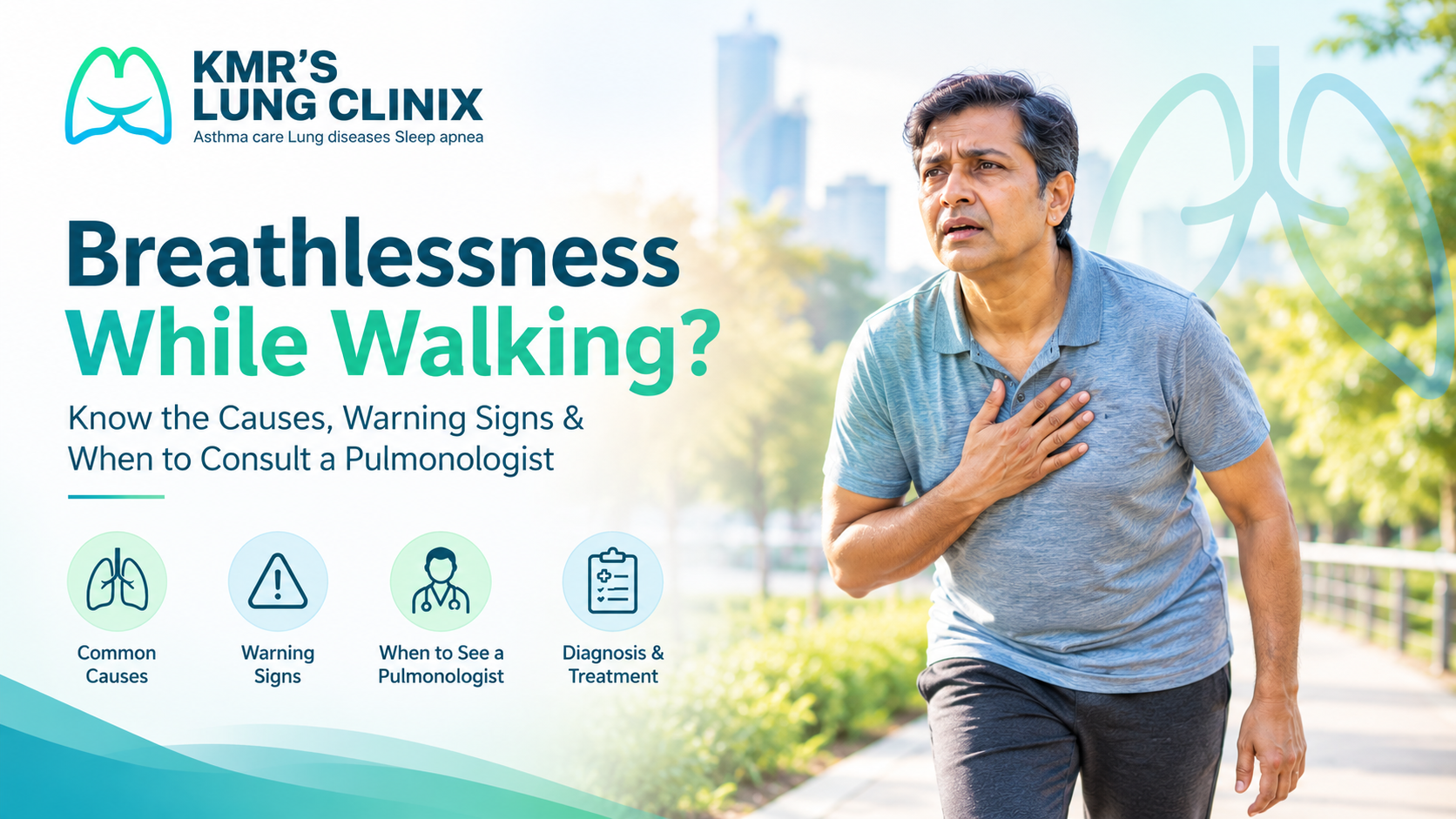
Feeling short of breath while walking can happen after intense physical activity, but frequent or unexplained breathlessness should not be ignored. It may be associated with asthma, COPD, respiratory infections, heart-related conditions, anemia, or reduced physical fitness. Identifying the underlying cause early can help you receive appropriate treatment and prevent symptoms from worsening.
If you frequently experience breathlessness while walking, consulting a qualified pulmonologist can help determine whether the problem is related to your lungs or another underlying condition.
What Is Breathlessness While Walking?
Breathlessness, medically known as dyspnea, is the feeling that you cannot get enough air or are having difficulty breathing. Some people notice it only when walking quickly or climbing stairs, while others may experience it even during slow walking or routine activities.
Occasional breathlessness after strenuous exercise can be normal. However, persistent or gradually worsening breathing difficulty deserves medical evaluation.
Common Causes of Breathlessness While Walking
Several conditions can contribute to shortness of breath, including:
1. Asthma
Asthma can cause airway narrowing and inflammation, leading to breathlessness, wheezing, coughing, or chest tightness. Symptoms may become more noticeable during exercise or exposure to allergens.
2. COPD
Chronic obstructive pulmonary disease (COPD) can progressively reduce airflow and make everyday activities such as walking more difficult. People who smoke or have long-term exposure to air pollution may have a higher risk.
3. Respiratory Infections
Pneumonia, bronchitis, and other respiratory infections can temporarily cause breathing difficulty, particularly when accompanied by cough, fever, chest discomfort, or weakness.
4. Reduced Fitness or Excess Weight
A sedentary lifestyle or excess body weight can make the body work harder during physical activity, resulting in breathlessness. However, persistent symptoms should not automatically be attributed to fitness alone.
5. Anemia
Low hemoglobin levels can reduce the amount of oxygen carried by the blood. This may cause tiredness, weakness, dizziness, and shortness of breath during physical activity.
6. Heart-Related Conditions
Certain heart conditions can cause breathlessness, especially during exertion. If breathing difficulty occurs with chest pain, fainting, unusual sweating, or palpitations, prompt medical assessment is important.
When Should You See a Pulmonologist?
Consider consulting a pulmonologist in Chennai if breathlessness:
- Happens repeatedly while walking or performing routine activities
- Is becoming progressively worse
- Occurs with persistent cough or wheezing
- Is accompanied by chest tightness
- Limits your normal daily activities
- Occurs despite only mild physical exertion
- Continues after recovering from a respiratory infection
A pulmonologist can evaluate your symptoms, medical history, lifestyle factors, and lung function to identify possible causes.
Warning Signs That Need Urgent Medical Attention
Sudden or severe breathlessness should not be ignored. Seek urgent medical care if breathing difficulty occurs with severe chest pain, bluish lips or face, confusion, fainting, coughing up significant amounts of blood, or rapidly worsening symptoms.
These symptoms can sometimes indicate a serious medical problem requiring immediate evaluation.
How Is Breathlessness Evaluated?
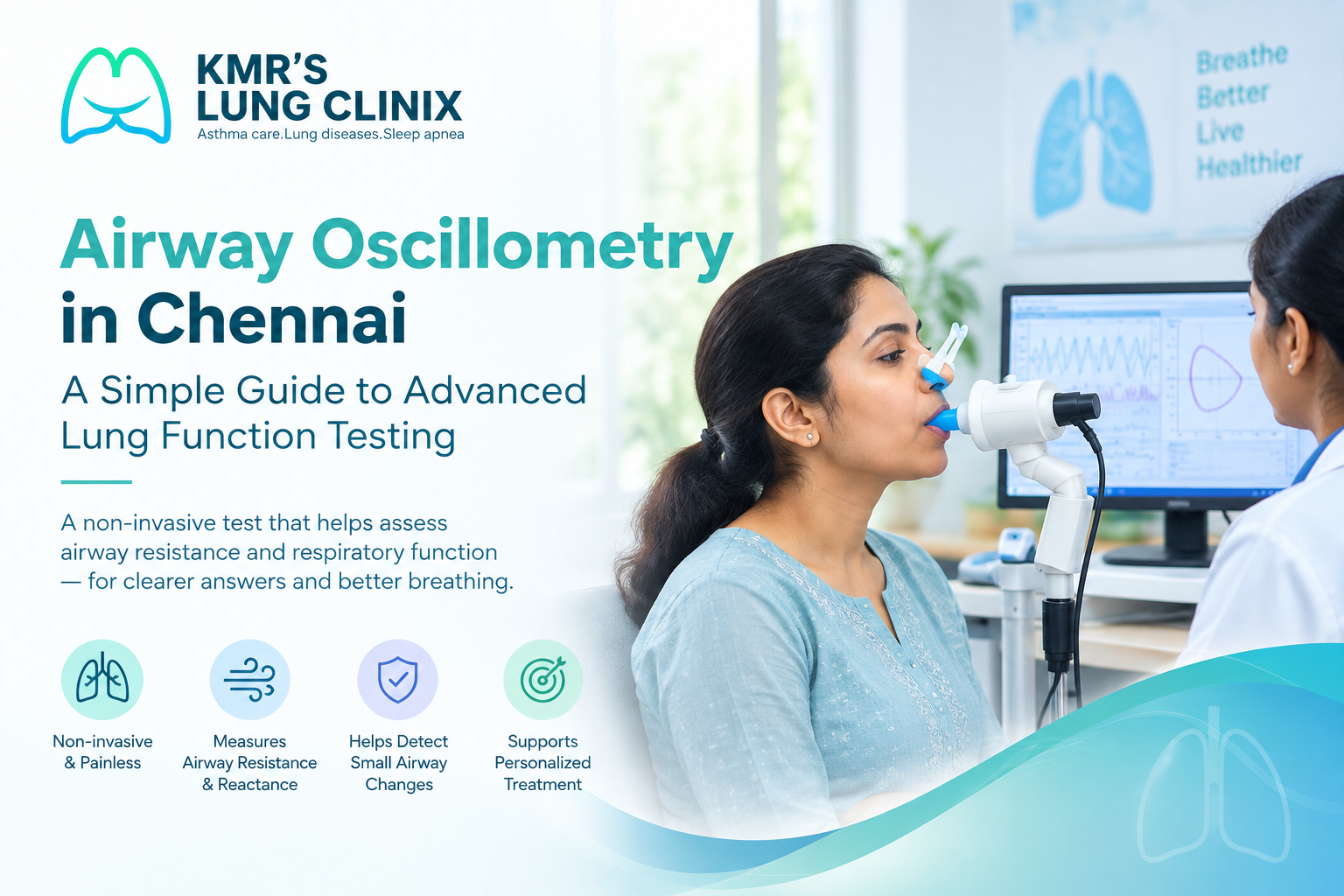
Depending on your symptoms, a doctor may recommend investigations such as spirometry, pulmonary function testing, chest imaging, blood tests, or other respiratory assessments. The appropriate tests depend on your individual symptoms and medical history.
At LUNG CLINIX, respiratory evaluation can help identify conditions affecting breathing and guide an appropriate treatment plan.
Treatment for Breathlessness
Treatment depends on the underlying cause. For example, asthma may require inhaled medications and trigger management, while COPD management can involve medication, smoking cessation, vaccinations, pulmonary rehabilitation, and lifestyle changes.
If anemia, infection, heart disease, or another condition is contributing to breathlessness, treatment will focus on that underlying problem.
Breathlessness While Walking: Don’t Ignore Persistent Symptoms
Occasional breathlessness after strenuous exercise may be normal, but persistent breathlessness while walking deserves attention. Early evaluation can help identify respiratory or other medical conditions and support timely management.
If you are experiencing unexplained breathing difficulty, consult LUNG CLINIX for professional respiratory evaluation and guidance. A pulmonologist can help determine the possible cause of your symptoms and recommend appropriate next steps.
LUNG CLINIX – Respiratory Care & Pulmonology Services in Chennai.